Deinosuchus
Contents
Overview
Deinosuchus lived in the Late Cretaceous, about 82 million years ago, in what is now North America. It inhabited both sides of the Western Interior Sea, a large inland sea that split the continent.
Fossils have been found at multiple localities along both shores of this sea, indicating it was a highly successful animal across the region.
Physical Characteristics
Maximum length roughly 33 ft and weight around 2.5 tonnes, with the possibility of larger individuals.
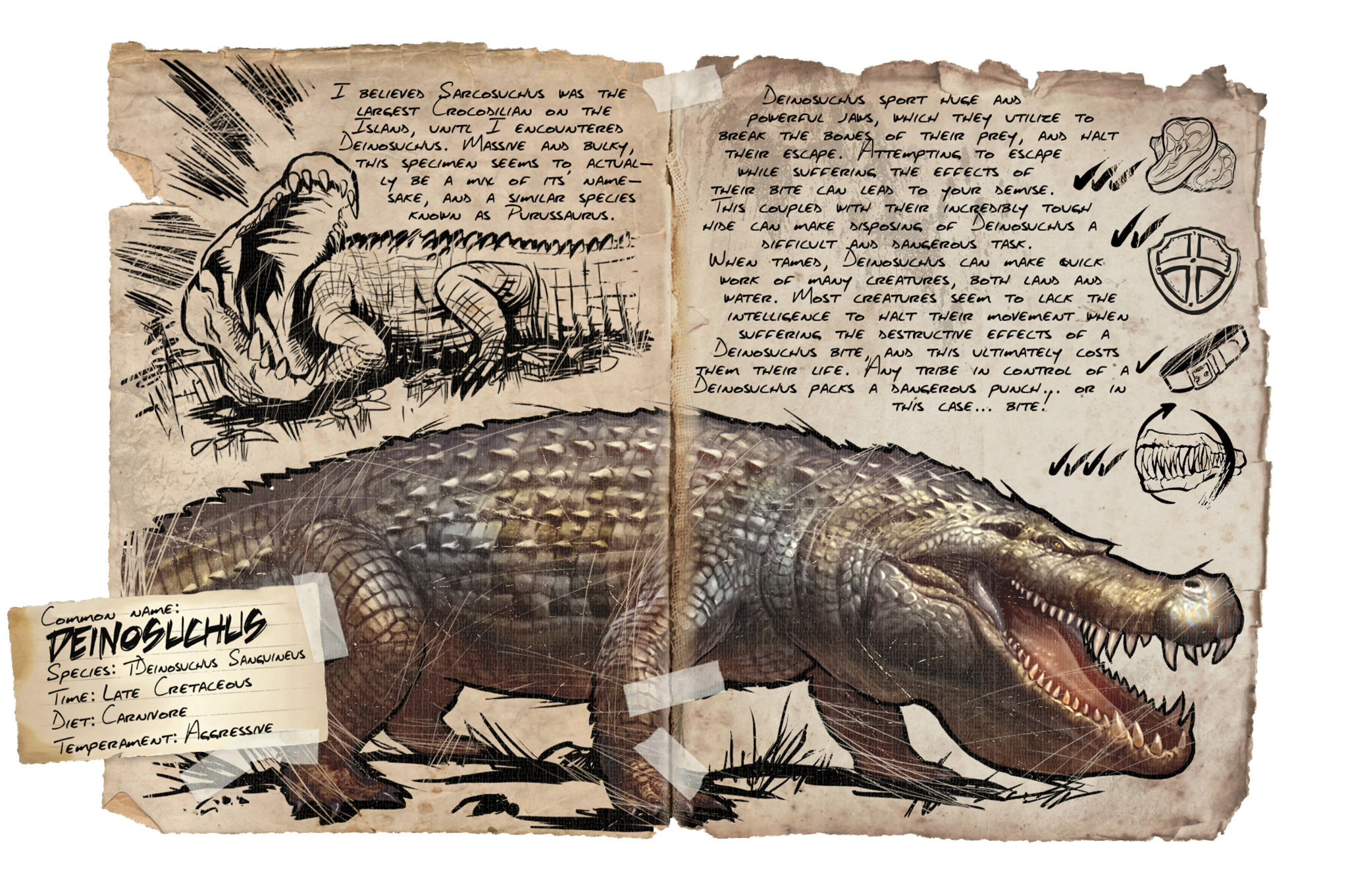
Resembled a modern alligator but had a slightly more bulbous snout.
Possessed extremely powerful jaws; bite force estimates range from 2 tonnes to 20 tonnes, comparable to the bite of Tyrannosaurus.
As an early member of Crocodilia, it shared many traits with today’s crocodiles, gharials, and alligators.
Ecology and Behavior
Deinosuchus was a semi‑aquatic ambush predator. It moved slowly in muddy water, then struck suddenly at unsuspecting prey. Bite marks on fossils show a diet that included turtles and large dinosaurs.
Its behavior likely mirrored that of modern alligators: powerful, patient hunters that could live alone or in groups. When in groups—probably no more than a dozen individuals—they regularly fought, sustaining injuries that its remarkable resilience and exceptional immune system allowed it to survive.
Evolutionary Significance
Deinosuchus was one of the early members of Crocodilia, the only surviving group of crocodylomorphs today. Modern crocodiles, gharials, and alligators are often called “living fossils” because they have changed little over millions of years, though they represent only a fraction of the diverse crocodylomorphs that existed since the Late Triassic, which included small predators, oceanic forms, and armored herbivores.